Map pins
Site spread
Pins are normalized from the recorded work coordinates so you can read the set spatially.
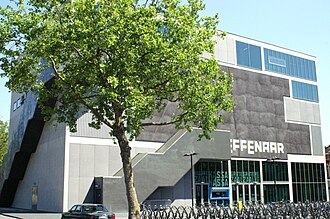
Effenaar
Eindhoven, Eindhoven, Netherlands · Exact work coordinates
OpenStreetMapFocused slot
Effenaar
Hero image
saved.archi
your architecture companion
Compare
Read a small selection side by side through images, place context, climate, typology, materials, carbon signals, accessibility, and related books.
Projects
1 selected · 1 other item held elsewhere in the compare set
Bureaus
1 selected · 1 other item held elsewhere in the compare set
Visual compare
The selected works stay in sync by slot, while the pins map where they sit inside the mixed set.
Map pins
Pins are normalized from the recorded work coordinates so you can read the set spatially.
Eindhoven, Eindhoven, Netherlands · Exact work coordinates
OpenStreetMapFocused slot
Hero image
Comparison
| Field | ||
|---|---|---|
| Type | work | bureau |
| Year / years | 2000 | Unrecorded |
| Place | Eindhoven, Eindhoven, Netherlands | Porto, Portugal |
| Place context | Eindhoven, Eindhoven, Netherlands | Representative site: Matosinhos, Porto District, Portugal |
| Climate | 14°C · 14.2h daylight · 9 km/h wind | 18°C · 13.5h daylight · 8 km/h wind · via Boa Nova Tea House |
| Focus | Architecture | 6 works in corpus |
| Architects |
|
|
| Linked context | Bureaus
| Notable works
|
| Typologies |
|
|
| Materials | Not recorded yet. |
|
| Carbon signals | building gives us a typology starting point even though the work does not have a recorded material palette yet. No dominant drivers yet. | Concrete, Glass, and Stucco look like the main embodied-carbon drivers in the current palette.
|
| Lower-carbon levers | No levers surfaced yet. |
|
| Accessibility | Access not recorded | 2 of 2 recorded works are publicly accessible |
| Related books | No linked books yet. |